
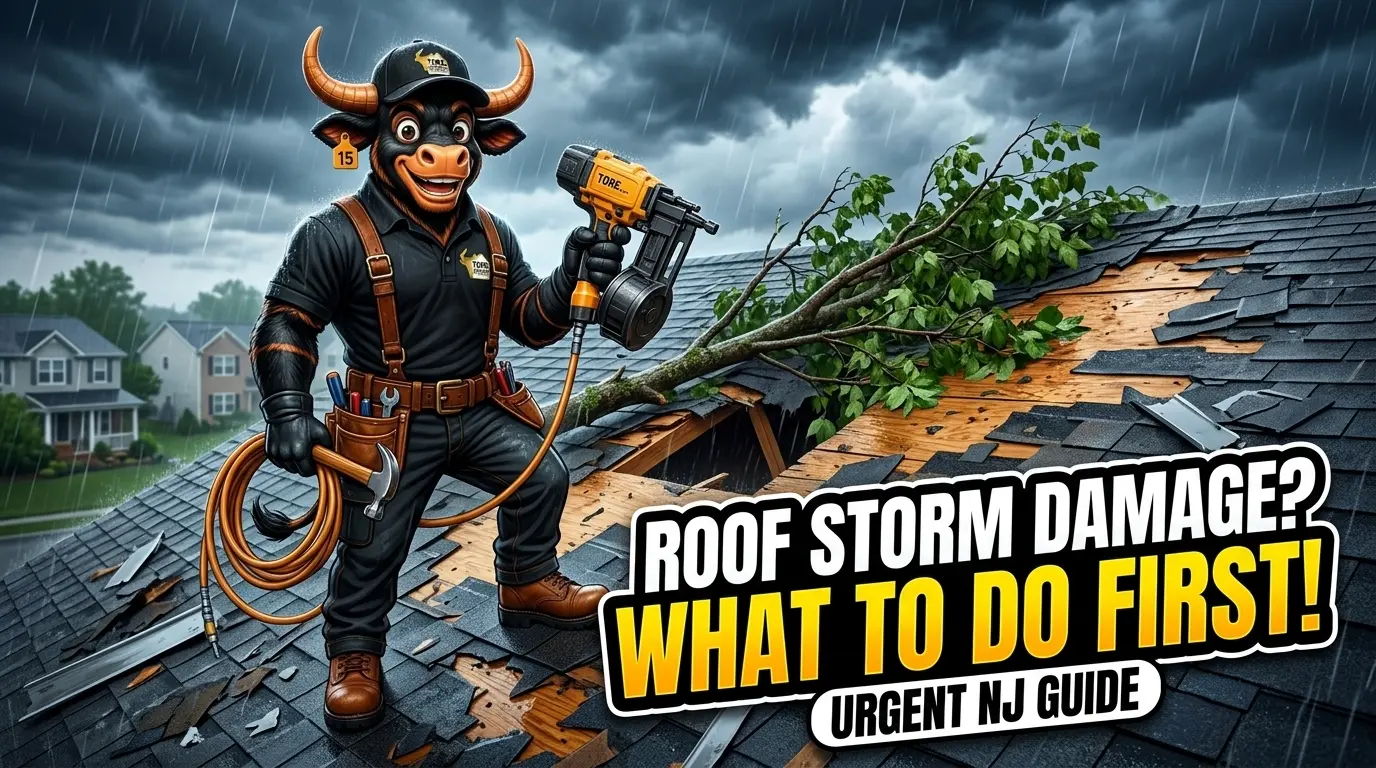
A heavy New Jersey storm can damage any roof in minutes. Wind tears shingles loose, hail dents flashing, and heavy rain finds every weak spot in the roofing system. If you find water on a ceiling or shingles in your yard, you need a plan. This guide walks New Jersey homeowners through the right steps after roof storm damage, from quick checks at home to when it is time to call a GAF certified roofing contractor. The right response keeps a small leak from becoming a much bigger repair bill.
First Hour: Safety and Quick Checks
First, keep everyone safe. Do not climb on the roof during or right after a storm, wet shingles are slippery and damaged decking can give out. From the ground, check the roof: look at gutters, debris, and missing shingles. Inside, look at ceilings and upper walls, especially near edges and vents. If water is dripping, put a bucket under the leak and move furniture out of the way. If a tree fell on the roof, leave the area and call a pro. Roof storm damage in New Jersey often shows up as ceiling stains, bowed plaster, and water around light fixtures. Take photos of every spot, with date and time. Those photos will help any future repair conversation.
First Day: Limit Further Damage
On day one, the goal is simple: stop more water from getting in. If the leak is active, an emergency roofing contractor in New Jersey can install a tarp over the damaged area to protect your home until a full repair is scheduled. Inside, dry out wet spots with fans and towels, wet drywall and insulation grow mold quickly, so do not wait. Walk the property and collect any roof material that fell, bag shingles or flashing pieces, and keep them with your photos. This is not the day to climb the roof yourself. Call a local roofing contractor and ask about emergency service. A 24/7 emergency roof team can usually arrive the same day and limit further damage right away.
First Week: Inspection and Estimate
Within a few days, schedule a full roof inspection. A GAF certified roofing contractor in New Jersey will check shingles, flashing, vents, and the underlying deck, including storm damage you cannot see from the ground like lifted shingles and cracked seals. After the inspection, you should get a written estimate that lists every repair, the materials, and the timeline. Ask if the contractor pulls a permit, works with the local building department, is bonded, and offers a workmanship warranty. Compare what you hear with the photos and shingles you saved. If something does not match, ask questions. Good roofers in New Jersey expect questions and answer them clearly.
Repair vs Replacement
Not every storm calls for a new roof. Small areas of missing shingles, minor flashing damage, or a single cracked vent can usually be repaired. Replacement makes more sense when storm damage is widespread, when the roof is near the end of its life, or when repairs would cost most of a replacement anyway. A bonded New Jersey roofing contractor can show you both options with real numbers on each. Repair is faster and cheaper in the short term. Replacement with a new GAF shingle system gives you a fresh roof, a new warranty, and a roof built to handle the next storm. Ask about financing if a full replacement is the right call, so you can start the work sooner and pay over time.