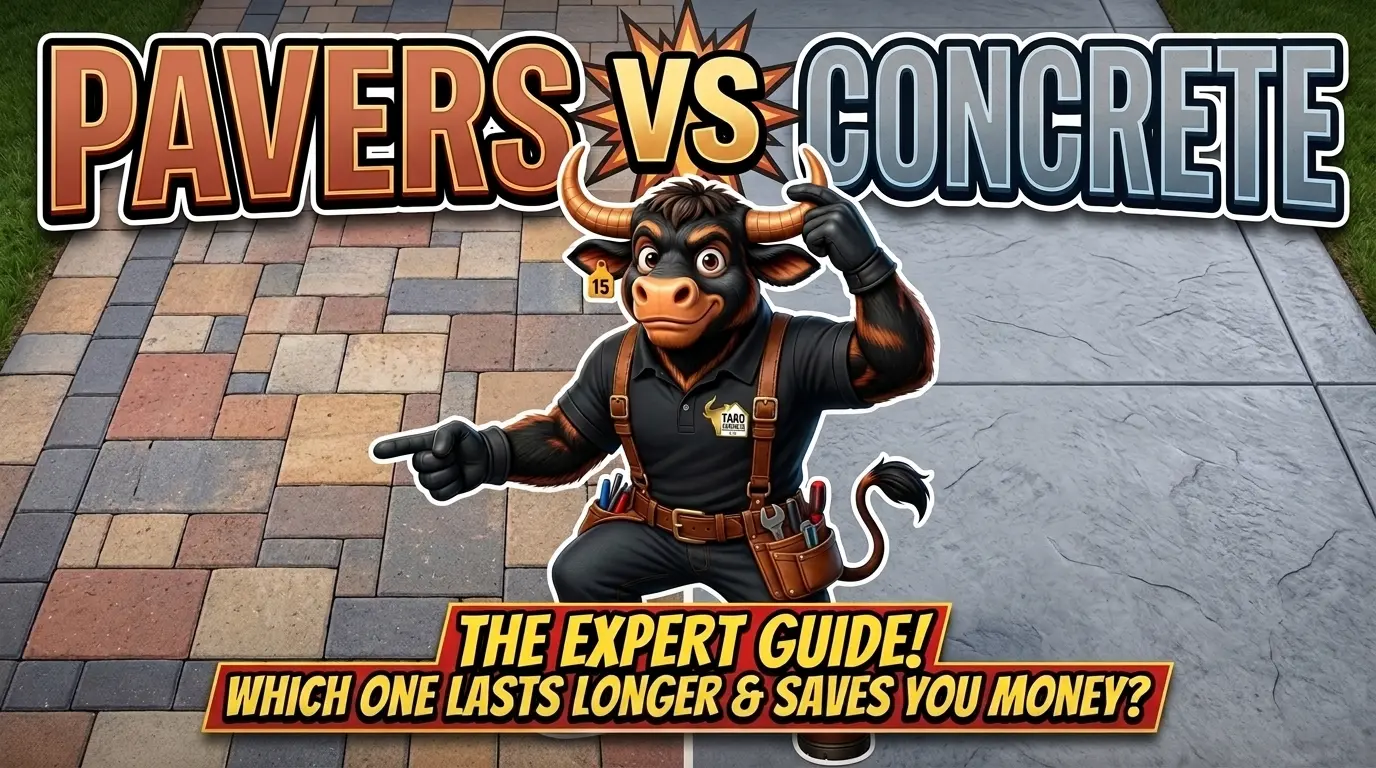
When New Jersey homeowners plan a new driveway, patio, or walkway, two materials usually rise to the top: pavers and poured concrete. Both can look great and last many years with the right base and the right contractor, but they behave differently in New Jersey weather, cost different amounts upfront, and age in different ways. This guide compares pavers vs concrete in New Jersey on four key things, cost, lifespan, repair, and curb appeal, so you can see where each one wins and pick what fits your home, your yard, and your budget.
Upfront Cost: Concrete vs Pavers
Concrete is usually cheaper upfront than pavers. Standard poured concrete costs less per square foot to install, especially on large flat surfaces like driveways. Pavers cost more upfront: the materials are pricier and the installation is more labor-intensive, since each paver has to be set on a compacted base of gravel and sand with edge restraints and joint sand. Stamped or decorative concrete falls between plain concrete and pavers in cost, because the finish work adds labor.
A New Jersey concrete contractor and a paver contractor can both give you written estimates on the same project, so you can compare apples to apples. If upfront cost is the only factor, plain concrete usually wins. If you are looking at total cost over twenty years, the math changes once you add in repairs.
Lifespan in New Jersey Weather
New Jersey weather is hard on outdoor surfaces. Freeze-thaw cycles push and pull on slabs, and salt eats at edges. Properly poured concrete on a good base can last twenty-five to thirty years, though cracks tend to show up over time and spread slowly. Pavers can last even longer, often thirty to forty years or more.
Pavers flex with the ground instead of cracking. When the ground shifts, pavers move with it, while a solid concrete slab cannot. That is the biggest reason many New Jersey homeowners pick pavers for driveways and patios. Both surfaces last well if base prep is done right, so the contractor matters as much as the material. A bonded contractor in New Jersey can pour either one to last.
Repair and Maintenance
This is where pavers really shine in New Jersey. If a single paver cracks or a section settles, the fix is simple: a contractor can lift the affected pavers, relevel the base, and reset them, and the repair blends in. Repairs on poured concrete are harder to hide. A patched crack rarely matches the surrounding slab, and a deep crack often means replacing the whole section. Stamped concrete can be touched up, but color matching is tricky.
Pavers also benefit from a joint sand refresh, and an occasional reseal keeps the surface looking new. Plain concrete needs sealing every few years to resist salt and water. In total maintenance hours both can be managed, but pavers are easier to repair without it looking like a patch.
Curb Appeal and Resale
Curb appeal is personal, and design options matter. Pavers come in many shapes, colors, patterns, and textures, so you can match a paver patio or paver driveway to your home’s style, with borders, accent strips, and built-in steps for design flexibility. Plain concrete cannot easily match that. Stamped concrete adds pattern and color to a slab and closes the gap, but the look is still a single slab.
On resale, both surfaces help when they are well kept. Many New Jersey buyers prefer pavers for the look and perceived quality, especially on patios and entry walkways. A New Jersey contractor can show you sample boards and recent project photos so you can decide what fits your home best.